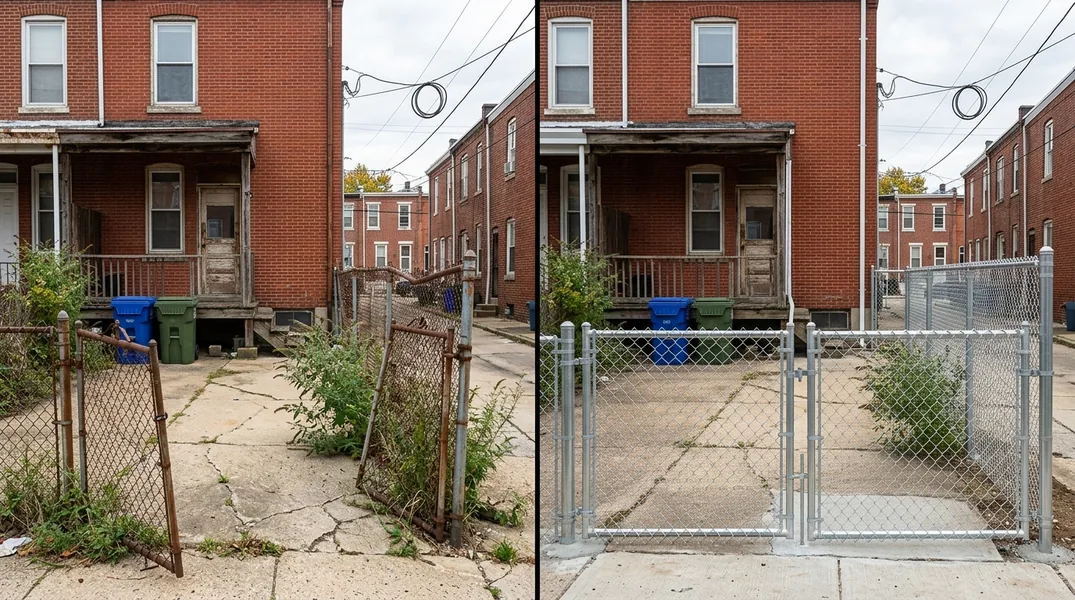
Understanding Freeze-Thaw Damage in Philadelphia Winters
Winter in Philadelphia brings more than just cold temperatures. The region experiences a particularly damaging weather pattern called the freeze-thaw cycle, where temperatures fluctuate above and below freezing multiple times throughout the season. This constant expansion and contraction of soil and materials can wreak havoc on fence structures, especially those made from wood.
When moisture seeps into wood fibers and then freezes, it expands. As temperatures rise, the ice melts and the wood contracts. Repeated over dozens of freeze-thaw cycles each winter, this process causes wood to crack, warp, and splinter. The wood's structural integrity deteriorates faster than it would in climates with more stable winter temperatures. For homeowners considering Wood & Privacy Fence Installation, understanding this seasonal stress is critical to making an informed decision about both material choice and long-term maintenance needs.
The freeze-thaw cycle also affects the ground around fence posts. Soil heaves as it freezes, potentially pushing posts upward or loosening them in their holes. This can lead to sagging sections, leaning posts, and gaps that compromise both the aesthetic appeal and security function of your fence.
How Long Does a Wood Fence Actually Last in Philadelphia?
A properly installed and maintained wood fence in Philadelphia typically lasts between 5 to 15 years, depending on wood species, installation quality, and maintenance commitment. This range is significantly shorter than the 15 to 20 years you might achieve in more temperate climates. Premium wood species like cedar and redwood, which naturally resist rot and insect damage, tend to last longer than pressure-treated pine, but even these premium options require consistent care to withstand Philadelphia's harsh winters.
The lifespan also depends heavily on how well the fence was installed initially. Posts set in concrete footings that extend below the frost line (typically 36 to 48 inches deep in the Philadelphia area) perform significantly better than those set shallowly. Proper drainage around the fence line is equally important. Water pooling against the fence base accelerates rot and increases freeze-thaw damage. When you request a free estimate from Philadelphia Fencing, our team evaluates your yard's drainage patterns to ensure your fence installation accounts for these critical factors.
Regular maintenance extends fence life considerably. Annual staining or sealing, prompt repair of damaged boards, and clearing debris from the fence base can add several years to your wood fence's lifespan. However, this ongoing investment in maintenance should factor into your total cost of ownership when you're budgeting for a fence project.
Wood & Privacy Fence Installation Cost in Philadelphia: What to Budget
The cost to install a wood fence in Philadelphia varies based on multiple factors, but understanding the breakdown helps you budget realistically. The fence cost per linear foot typically ranges from $25 to $60 for materials alone, depending on wood species and board quality. Cedar and redwood command premium prices, while pressure-treated pine offers a more budget-friendly option. On top of material costs, fence installation labor cost generally runs $15 to $35 per linear foot, though this varies based on site conditions, ground difficulty, and local labor rates.
For a typical residential project, the cost to fence a yard with 150 linear feet of privacy fencing might range from $6,000 to $14,250 when combining materials and labor. A smaller 75-linear-foot section could cost $3,000 to $7,000. These estimates assume standard ground conditions and straightforward installation. If your property has rocky soil, steep slopes, or existing structures that complicate installation, expect costs to increase. Philadelphia Fencing provides transparent pricing based on your specific project requirements, and we encourage homeowners to call us at (267) 214-2199 for a detailed consultation.
It's important to view fence installation as an investment rather than a pure expense. A well-installed wood fence adds curb appeal, increases privacy, and enhances property value. However, factor in the maintenance costs over the fence's lifespan. Annual staining or sealing typically costs $500 to $2,000 depending on fence length, and occasional board replacement adds to ongoing expenses. These long-term costs should inform your choice between wood and alternative materials like Vinyl & PVC Fence Installation, which requires less maintenance but carries higher upfront installation costs.
Comparing Wood to Alternative Materials for Philadelphia Weather
While wood offers natural beauty and traditional charm, it's not the only option for Philadelphia homeowners dealing with harsh winters. Vinyl & PVC Fence Installation has become increasingly popular in the region specifically because vinyl resists freeze-thaw damage far better than wood. Vinyl doesn't absorb moisture, so ice expansion within the material isn't a concern. Vinyl fences typically last 20 to 30 years with minimal maintenance, requiring only occasional cleaning rather than annual staining.
However, vinyl comes with a higher upfront cost, often running $40 to $80 per linear foot for materials and installation combined. Over a 20-year period, the total cost of ownership may actually be comparable to wood when you factor in maintenance expenses, but the initial investment is steeper. Chain Link Fence Installation offers an even more economical option, starting around $8 to $15 per linear foot, though it provides less privacy and aesthetic appeal. Aluminum & Ornamental Iron Fencing provides a sophisticated alternative for homeowners seeking durability and elegance, though costs vary significantly based on design complexity.
The best material choice depends on your priorities. If you value natural appearance and are willing to invest in maintenance, wood remains an excellent choice. If you prefer minimal upkeep and maximum longevity despite higher upfront costs, vinyl is worth the investment. Philadelphia Fencing can help you evaluate these options based on your budget, aesthetic preferences, and long-term maintenance tolerance. Contact us at (267) 214-2199 to discuss which material makes sense for your specific situation.
Maintenance Tips to Extend Your Fence's Life Through Winter
Protecting your wood fence through Philadelphia's freeze-thaw winters requires proactive maintenance starting well before the cold season arrives. In fall, inspect your entire fence for cracks, loose boards, and signs of rot. Address any damage immediately, as small problems compound when exposed to repeated freeze-thaw cycles. Clean debris from the fence base and ensure water drains away from the structure rather than pooling against it. Clear gutters and downspouts so roof runoff doesn't saturate the ground around fence posts.
Apply a quality sealant or stain to your wood fence every one to two years, with particular attention before winter. This protective coating reduces moisture absorption and slows the freeze-thaw damage process. While this requires an investment of time and money, it's far less expensive than replacing sections of fence prematurely. During winter, monitor your fence after heavy snow or ice storms. Remove accumulated snow from fence panels, as the weight can stress the structure and the melting snow creates additional moisture exposure.
Spring inspection is equally important. After the final thaw, check for heaved posts, cracked boards, and areas where freeze-thaw action has caused damage. Repair these issues promptly before rot sets in. If you notice significant deterioration or structural problems, contact Philadelphia Fencing at (267) 214-2199 for a professional assessment. Sometimes targeted repairs can extend your fence's life by several years, while other situations may warrant planning for eventual replacement.
Planning Your Fence Project: Getting Started with Philadelphia Fencing
If you're considering a new fence installation or evaluating whether your existing fence can survive another Philadelphia winter, now is the time to take action. The best time to install a fence is typically late spring through early fall, when ground conditions are optimal and weather cooperates with the installation process. However, planning should begin well before construction starts. Assess your property's drainage, identify any underground utilities, and determine your budget and material preferences.
Philadelphia Fencing specializes in helping homeowners navigate these decisions. Whether you're interested in traditional Wood & Privacy Fence Installation, low-maintenance vinyl, or another material option, our team brings decades of experience installing fences that withstand Philadelphia's demanding weather. We provide transparent estimates that break down material and labor costs so you understand exactly what you're investing in. Call us today at (267) 214-2199 or request a free estimate online to discuss your project with a fencing expert who understands the unique challenges Philadelphia winters present.
Looking for a professional tree service in Philadelphia? Philadelphia Fencing responds fast for all your fence needs.
Get a Free Quote