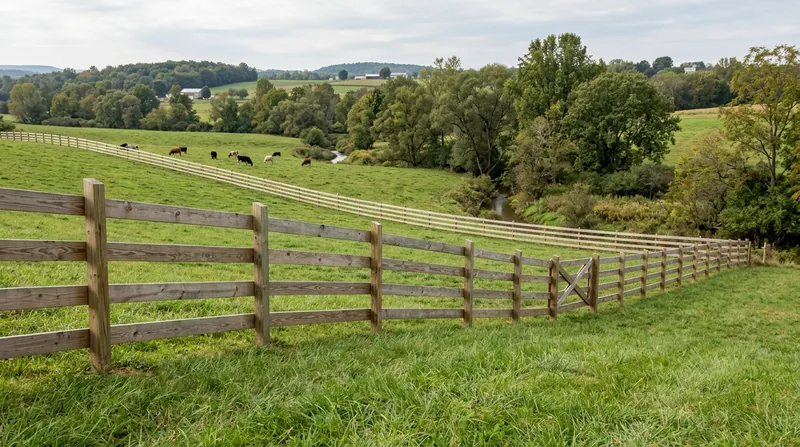




Farm fence installation in Philadelphia and the surrounding counties of Bucks and Chester serves property owners working open ground, pasture, and rolling acreage where residential lot lines give way to working land. The terrain here is creek valleys, seasonal water tables, and the defining challenge: the freeze-thaw cycle that lifts shallow posts season after season. Posts set below the frost line, stepped to follow grade, and built with proper bracing are the difference between a fence that lasts and one that fails in its third winter. We have been building farm and ranch fencing since 2010, setting wood rail runs, wire enclosures, and split rail lines on properties across Greater Philadelphia where the land and the work demand it.
Why Farm & Ranch Fencing Matters on Philadelphia-Area Acreage
Farm fencing is not residential privacy fencing. It runs open pasture, contains livestock or horses, or marks boundary on rolling property where a shallow post and a quick concrete job fail within seasons. The local freeze-thaw cycle in Bucks and Chester counties is relentless: water in the ground expands each winter and lifts posts set too shallow, creating sag, leaning, and eventual collapse. Proper footing depth, post spacing, and anti-sag bracing are not optional. A well-built farm fence holds for decades; a rushed job costs twice as much to fix.
- Posts must be set below the frost line, typically 3.5 to 4 feet deep in our area, to resist heave.
- Wood rail fencing is stepped to follow grade, avoiding flat runs that trap water and rot stringers at low points.
- Split rail, pipe, and no climb horse fence are sized to pasture and animal type, not guesswork.
- Wire and barbed wire runs are tensioned properly and braced to prevent sag under animal pressure or weather load.
- Gate openings for ranch access are built cantilever or on V-track to swing clear and hold square over time.
A fence built right is an investment in pasture integrity, animal containment, and long-term property value.
Key info: Bucks and Chester county properties often sit on land that predates modern survey. We work from your existing survey or property description and install on the line you identify. For questions about boundary location or property line disputes, a licensed Pennsylvania land surveyor should be consulted. We recommend checking with your local building department in Media, West Chester, or Doylestown to confirm setback and height rules before we begin.
How We Build Farm & Ranch Fencing in Philadelphia and Surrounding Counties
Our process starts on the ground. We walk the property, identify grade changes, spot existing utilities using Pennsylvania 811 locates (required by law before digging), and plan post placement to follow the natural slope. Posts are dug to frost line depth, set in concrete, and braced during the cure. Rails are cut and installed square to the posts, and wire or board runs are tensioned to hold without sag. Every gate swings true and latches cleanly. We do not rush the work, and we do not cut the footing.
- We mark the fence line with you and call 811 for utility locates before any digging begins.
- Posts are dug to below frost line depth, set in concrete, and allowed to cure before rail installation.
- Rails are installed level or stepped to grade, depending on slope and fence type.
- Wire runs are tensioned with proper hardware and braced to prevent sag under load or weather.
- Gates are hung plumb, braced for sag resistance, and fitted with hardware that closes and latches smoothly.
- We inspect the finished line and make adjustments before we leave the property.
The result is a fence that stands through Pennsylvania winters and serves your property for years.
Local example: A property in Phoenixville with 600 linear feet of pasture fencing on a 12 percent grade required stepped post placement, wood rail construction with anti-sag bracing, and a cantilever gate at the driveway. The fence was built over three weeks to allow concrete cure time between phases. Five years later, the fence remains plumb and the posts have not heaved.
Farm & Ranch Fencing Methods and Materials
| Approach | Description | Best for |
|---|---|---|
| Wood Rail Fencing | Pressure-treated or cedar posts and rails, stepped to follow grade, built with proper bracing and post depth. | Pasture, horse containment, and boundary marking on rolling property. |
| Split Rail Fencing | Classic three or four rail construction, typically cedar or pressure-treated, with posts set deep and stepped to grade. | Traditional pastoral appearance and horse or livestock containment on acreage. |
| No Climb Horse Fence | High-tensile wire woven or welded mesh, typically 2x4 or 2x6 opening, mounted on wood posts with proper tension and bracing. | Horse containment where visibility and safety are priorities, and animal pressure is high. |
| Pipe and Barbed Wire Fencing | Steel posts and horizontal pipe or barbed wire runs, tensioned and braced, typically galvanized or powder-coated. | Livestock containment on working farms, where durability and low maintenance are required. |
| Ranch Gates and Access | Cantilever or V-track hung gates with proper bracing, self-closing or self-latching hardware, and weather-sealed hinges. | Driveway and pasture access points where the gate must swing clear and hold square through seasons. |
Farm & Ranch Fencing Cost in Philadelphia: What to Expect
Farm and ranch fencing starts at approximately $15 per linear foot for basic wood rail or wire runs on level or gently sloping ground, with posts set to frost line depth and proper bracing included. The final cost depends on several concrete factors: the total linear footage of fence, the slope and grade changes that require stepped installation, the material choice (pressure-treated pine, cedar, high-tensile wire, or pipe), post spacing, the presence of gates, and site access. Properties with steep grade, rocky soil, or limited equipment access run higher because digging and setting posts takes longer. A property in West Chester with 800 linear feet of split rail fencing on rolling acreage with two gates will cost significantly more than a flat 300-foot run.
We recommend getting two or three estimates before you commit. Each estimate should include post depth, post spacing, material grade, and any site-specific conditions that affect the price. A free estimate from Philadelphia Fencing takes about 30 minutes on site and covers all of this detail. Call us at (267) 214-2199 to schedule. See our pricing page for more detail on what moves the cost up or down.
Farm & Ranch Fencing Near Me: What Philadelphia-Area Homeowners Should Know Before Hiring
Hiring a farm fencing contractor is a commitment to workmanship and knowledge of local soil and climate. Before you call, confirm that your contractor is fully insured and can provide a certificate of insurance on request. Ask for references from similar projects in your area, and call at least two. Understand that Pennsylvania has no state license for fence work, but anyone performing more than $5,000 of home improvements per year must register with the Pennsylvania Office of Attorney General. Ask the contractor for their HIC registration number and verify it before you sign a contract.
Check with your local building department (in Philadelphia, Media, Doylestown, or whichever municipality you are in) to confirm whether a permit is required for farm fencing and what height or setback rules apply. If you are in a homeowners association or master-planned community, review your deed restrictions and architectural guidelines before work begins. Some HOAs restrict material, height, or color even on acreage. For questions about property lines or boundary disputes, contact a licensed Pennsylvania land surveyor. We work from your existing survey and install on the line you identify.
Contact us at Philadelphia Fencing for a free, no-obligation estimate. We respond within 24 hours and can answer questions about your specific property and the best fence type for your land and animals.
Farm & Ranch Fencing in Philadelphia: Pricing Guide
| Service | Price | Details |
|---|---|---|
| Wood Rail Fencing | Starting at $15/ft | Pressure-treated posts and rails set to frost line depth with proper bracing, stepped to grade on sloped property |
| Split Rail Fencing | Starting at $18/ft | Three or four rail cedar or pressure-treated construction, posts set deep, stepped installation on rolling acreage |
| No Climb Horse Fence | Starting at $16/ft | High-tensile wire mesh on wood posts, tensioned and braced for animal containment and safety, includes hardware |
| Pipe and Barbed Wire Fencing | Starting at $14/ft | Galvanized or powder-coated steel posts and pipe, tensioned wire runs, livestock containment on working farms |
| Ranch Gates and Access | Starting at $800 each | Cantilever or V-track hung gates, self-closing hardware, braced for sag resistance, includes hinges and latch |
| Site visit and estimate | Free | Response within 24 hours at (267) 214-2199, no obligation, covers all site conditions and material options |
Indicative pricing, the exact cost depends on square footage, finish, and site access. Free personalized estimate within 24h at (267) 214-2199.


