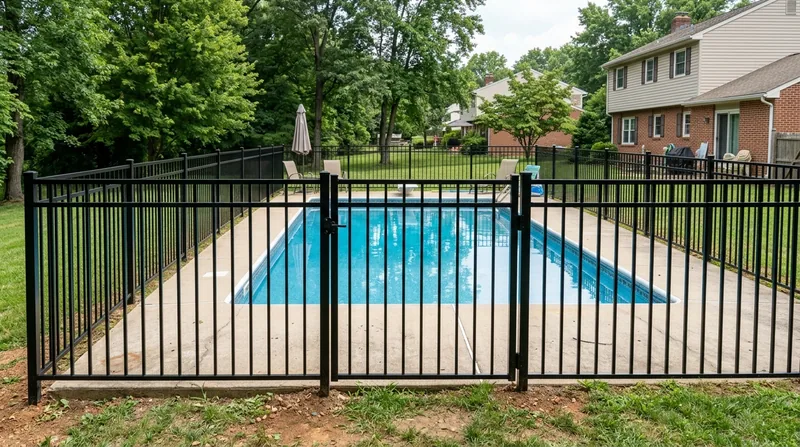




A pool fence installation in Philadelphia is not optional where there is a pool: it is a code requirement, and it must meet the specific barrier standards set by your local authority. Philadelphia's dense rowhouse neighborhoods and older suburban lots present real challenges, from narrow side yards and shared boundaries to the freeze-thaw cycle that heaves posts season after season if they are not set deep enough. We install pool barriers to code, set posts below the frost line, size gaps and heights to match your jurisdiction's requirements, and hang gates to swing away from the water with hardware that latches above a child's reach. Since 2010, we have worked on pools across Philadelphia and the surrounding townships, and we know the code differences between one municipality and the next. A pool barrier is a serious piece of work, and it deserves a contractor who understands both the technical side and the local rules.
Why Pool Fence Installation Matters in Philadelphia
A pool is attractive to children, and the law recognizes that a barrier is the first line of defense. Pennsylvania code and local ordinances in Philadelphia and neighboring areas require a fence or wall that isolates the pool from the rest of the property. Height, gap size, gate swing direction, and latch height are all specified, and they vary slightly depending on whether your pool sits in the city, King of Prussia, Media, or another township in the region. A barrier installed to code is not just legal; it is the difference between a safe installation and one that exposes you to liability if a child gains access.
- We install the fence to meet the pool barrier code that applies at your address, verified with your local building department.
- Posts are set in concrete below the frost line so they do not heave and create gaps as the ground freezes and thaws each winter.
- Gate hardware is self-closing and self-latching, with the latch mounted above the reach of a young child.
- We work from your existing survey and install on the line you identify, without offering a boundary opinion or property line determination.
A properly installed pool barrier protects your family and keeps you compliant with the law.
Key info: Pool barrier codes are set by your local authority having jurisdiction. We install to meet that code, but the final determination of compliance rests with the building department or code official in your township. Check with your municipality before you start, and bring any written requirements to your estimate appointment.
For more detail on code requirements in your area, contact your local building department or review the Pennsylvania Department of Environmental Protection guidance on public and residential pool safety standards.
How We Install a Pool Fence in Philadelphia: Step by Step
The process begins with a site visit where we measure the pool perimeter, identify the property line you want to use, and confirm which code applies at your address. We then call for a Pennsylvania 811 utility locate to mark underground lines before we dig any post holes. Once utilities are marked, we set posts in concrete below the frost line, typically 36 to 48 inches deep depending on local frost depth, which is critical in our climate. We then hang the fence material, check all gaps and heights against your code, and install the gate with hardware that meets the latch and swing requirements. The entire job is coordinated to minimize disruption, and we clean up all debris and soil when we are done.
- We schedule a free on-site estimate, measure the perimeter, and identify the fence line you want to use.
- We confirm the pool barrier code that applies at your address by checking with the local building department.
- We file for a Pennsylvania 811 utility locate call, which is required by law before any digging begins.
- We dig post holes below the frost line, set posts in concrete, and allow proper cure time before hanging materials.
- We hang the fence material, verify all gaps and heights match code, and install the gate with self-closing, self-latching hardware.
- We verify the gate swings away from the pool and latches above the reach of a small child.
The entire process is designed to give you a barrier that is both code-compliant and built to last through Philadelphia's winters.
Example: A typical residential pool in Ardmore or Wynnewood sits in a backyard with existing masonry, narrow side yards, or shared fences. We work around those constraints, often using a combination of new fence and existing structures to complete the barrier. Posts are set deep, and the gate is positioned for safe egress from the pool area while maintaining the barrier integrity.
If you already have a fence that needs repair or adjustment to meet pool code, we can assess whether repair or replacement makes sense.
Pool Fence Installation Methods and Materials
Pool barriers can be built from several materials, each with different costs, durability, and code compliance profiles. Vinyl and aluminum are popular because they resist corrosion and rot, while wood and chain link are also code-compliant if properly maintained. The choice depends on your aesthetic preference, budget, and how much maintenance you want to do over time. We will walk you through the pros and cons of each during your estimate and help you pick the approach that makes sense for your property and your code.
| Material | Description | Best for |
|---|---|---|
| Vinyl | PVC panels hung on aluminum or vinyl posts, no painting or staining, very low maintenance, gaps easily adjustable to code. | Homeowners who want durability and minimal upkeep, especially in areas with freeze-thaw cycles. |
| Aluminum | Lightweight, powder-coated, will not rot or rust, easy to adjust gaps, professional appearance, higher initial cost. | Pools in visible areas, HOA communities, or where a refined look is preferred. |
| Wood | Pressure-treated pine or cedar, requires staining and sealing every few years, traditional appearance, moderate cost. | Homeowners comfortable with annual maintenance and who prefer a traditional fence look. |
| Chain Link | Galvanized or vinyl-coated steel mesh, lowest cost, requires gap inspection and gate maintenance, very durable. | Budget-conscious homeowners or temporary barriers, requires regular inspection to maintain code compliance. |
| Removable Mesh | Removable barrier panels that can be taken down when the pool is not in use, ideal for seasonal pools, code-compliant. | Homeowners with seasonal pools or those who want to open the backyard when the pool is closed. |
Each material has a place, and we help you choose based on your code, your budget, and your long-term maintenance tolerance.
Pool Fence Installation Cost in Philadelphia: What to Expect
Pool fence costs in the Philadelphia area start at approximately $42 per linear foot for a basic chain link or vinyl barrier on a straightforward property. The total price depends on several factors: the perimeter of the pool, the material you choose, the depth of post holes required to reach below the frost line (which is critical in our climate), whether the property has difficult access or existing structures that complicate installation, and whether any code-required adjustments or gate modifications are needed. A typical residential pool barrier might run anywhere from $2,000 to $6,000 or more, depending on the scope and materials. We always recommend getting two or three estimates from local contractors so you understand the range and the reasoning behind each bid.
The estimate is free, and we provide it within 24 hours of your call. We will walk through the material options, the code requirements specific to your address, and the total cost before you commit to anything. For a detailed pricing overview and examples of typical jobs, visit our full pricing page.
Factors that move the cost up include:
- A longer perimeter or larger pool footprint means more linear feet of fence and more posts to set.
- Difficult site access, shared boundaries, or existing masonry may require special techniques or additional labor.
- Vinyl and aluminum materials cost more upfront than chain link but require less maintenance over time.
- Gate complexity, including self-closing hardware and latch systems that meet code, adds to the total.
- Utility locates, permit fees, or code-specific adjustments are passed through at cost.
We will give you a clear, itemized estimate so you know exactly what you are paying for and why.
Pool Fence Installation Near Me: What Philadelphia Homeowners Should Know When Hiring
Choosing a contractor for pool fence work is not just about price; it is about getting someone who understands the code, knows the local frost line depth, has the right equipment to set posts properly, and will stand behind the work. When you are looking for a pool fence contractor in Philadelphia, Norristown, Media, or any of the surrounding townships, ask these questions: Are you fully insured and registered with the state? Can you verify that you know the specific code requirements for my address? Will you call 811 before digging? Can you provide references from recent pool fence jobs in my area? Do you offer a warranty on the installation? A contractor who can answer these questions clearly and who takes time to understand your property is the one you want.
We have been AFA Member Installers since 2010, and we work across Greater Philadelphia. We know the code differences between municipalities, we understand the frost line challenges in our climate, and we do not cut corners on post depth or gate hardware. If you want an honest estimate and a straightforward explanation of what your pool needs, call us at (267) 214-2199 or request a free estimate online. We will visit your property, measure the pool, check the local code, and give you a price with no obligation.
Pool Fence Installation in Philadelphia: Pricing Guide
| Service | Price | Details |
|---|---|---|
| Chain Link Pool Fence | Starting at $42/ft | Galvanized or vinyl-coated mesh, posts set in concrete below frost line, basic self-closing gate included |
| Vinyl or Aluminum Pool Fence | Starting at $55/ft | PVC or powder-coated aluminum panels, professional appearance, low maintenance, hardware and gate included |
| Wood Pool Fence | Starting at $48/ft | Pressure-treated pine or cedar, traditional look, requires annual staining, posts set deep for winter stability |
| Removable Mesh Barrier | Starting at $35/ft | Seasonal pool option, removable panels, quick installation and takedown, code-compliant latch hardware |
| Complex or multi-material installation | On estimate | Difficult access, existing structures, code modifications, or custom gate configurations require site assessment |
| Free estimate and consultation | No charge | Response within 24 hours, site visit, code verification, material options, no obligation to book |
Indicative pricing, the exact cost depends on square footage, finish, and site access. Free personalized estimate within 24h at (267) 214-2199.


