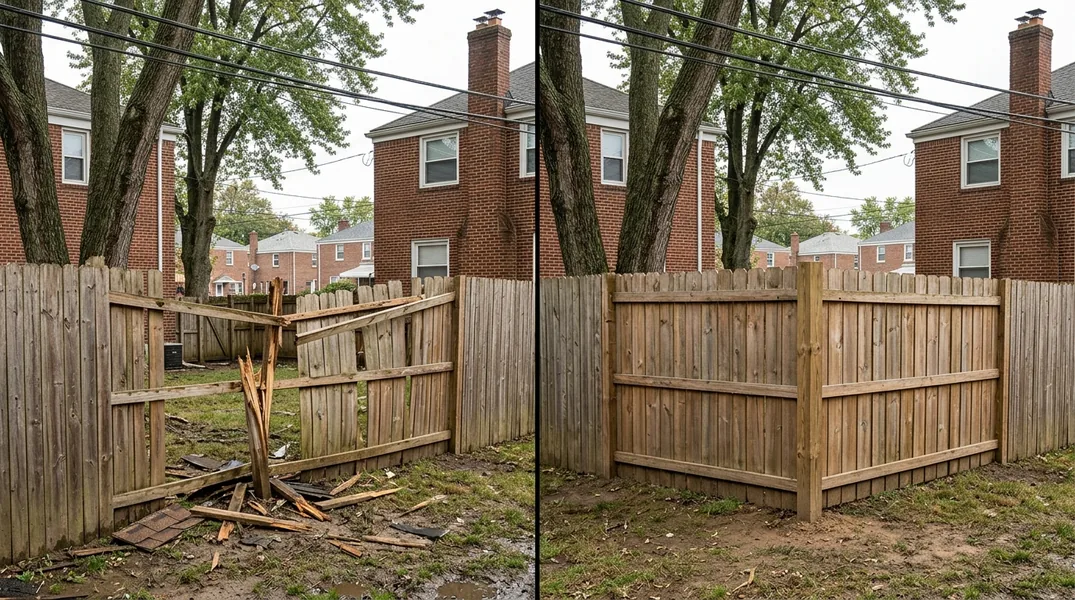
Understanding Fence Planning for Historic Twin Homes
The charming twin homes built in the 1920s throughout Drexel Hill and Lansdowne represent some of Philadelphia's most distinctive residential architecture. These properties often feature modest yards with existing fence lines that have stood for nearly a century, and many homeowners today are grappling with the question of whether to repair, restore, or replace their aging fencing. When you own a 1920s twin, fence planning becomes more than just a practical matter; it's about maintaining the character and curb appeal that defines these historic neighborhoods.
The first step in any fence planning project is assessing what you currently have and what condition it's in. Many original fences from this era were constructed with wood, and while some have weathered remarkably well, others show significant signs of age and deterioration. Before you commit to a complete replacement, it's worth considering whether your existing fence can be restored through proper maintenance and treatment. This is where understanding your options for fence staining and sealing becomes essential. The choice between restoration and replacement will largely depend on the structural integrity of your posts and rails, the aesthetic goals you have for your property, and your budget.
The Case for Fence Staining and Sealing in Philadelphia's Climate
Wood & Privacy Fence Installation in the Philadelphia area requires special attention to weathering and moisture protection. Our region experiences significant seasonal changes, with humid summers and wet springs that can accelerate wood decay if proper protective measures aren't in place. Fence staining serves two critical functions: it protects the wood from ultraviolet radiation and moisture penetration while also refreshing the appearance of your fence. If you have an older wood fence that's showing its age but remains structurally sound, staining can extend its life by five to ten years or more, depending on the product quality and maintenance schedule.
Sealing your fence is equally important and often works in tandem with staining. While staining provides color and some UV protection, fence sealing creates a protective barrier that prevents water from soaking into the wood grain. In a climate like ours, where rain is frequent and humidity levels fluctuate throughout the year, this moisture barrier is the difference between a fence that lasts another decade and one that begins to rot within a few years. Many homeowners in Drexel Hill and Lansdowne find that applying both a quality stain and sealer to their existing fences is a cost-effective way to maintain their property's curb appeal without the expense of a complete fence replacement.
Fence Staining Cost in Philadelphia: What to Budget
Understanding fence staining cost is crucial when you're planning your home improvement budget. The expense of staining a fence depends on several variables, including the total linear footage of fencing you need to treat, the condition of the wood, the type of stain you choose, and whether you're hiring professionals or tackling the project yourself. For a typical residential property in Philadelphia, a standard privacy fence might range anywhere from 100 to 200 linear feet. Professional pricing for staining typically falls between $1.50 and $4.00 per linear foot, meaning a modest fence could cost between $150 and $800 to stain professionally, depending on these factors.
If your fence requires prep work such as power washing, sanding, or repair of damaged boards, expect the cost to increase accordingly. Some contractors charge separately for preparation, which can add $0.50 to $1.50 per linear foot to your total. Premium stains and sealers will also command higher prices than basic options, but they often provide better longevity and UV protection. When comparing quotes, be sure you understand what's included in each estimate. Some companies include sealing in their staining cost, while others charge separately. Getting a free estimate from a local fence professional is the best way to understand what your specific project will cost. Call Philadelphia Fencing at (267) 214-2199 to discuss your fence staining needs and receive a detailed quote tailored to your property.
Choosing Between Staining and Complete Fence Replacement
One of the most important decisions you'll make in fence planning is determining whether restoration through staining makes sense or whether a complete replacement is the better long-term investment. If your fence posts are solid, the rails aren't rotted, and the overall structure is still sound, staining and sealing can be an excellent way to extend the fence's life and improve its appearance. However, if you notice soft spots in the wood when you press on it with a screwdriver, if posts are leaning or wobbly, or if large sections of boards are missing or severely damaged, replacement may be the more practical choice.
The aesthetic preferences of twin home owners in neighborhoods like Drexel Hill and Lansdowne also play a role in this decision. Some homeowners want to maintain the rustic, vintage character of their original fences and choose staining as a way to preserve that aesthetic. Others see a fence replacement as an opportunity to upgrade to more modern materials or styles. If you're considering replacement options, Vinyl & PVC Fence Installation offers a low-maintenance alternative that requires no staining or sealing, while traditional wood replacement with Wood & Privacy Fence Installation allows you to maintain the classic look that complements historic homes. Each option has different cost implications and maintenance requirements worth exploring.
Finding Quality Fence Staining Near Me: Local Expertise Matters
When you search for fence staining near me, you'll want to find a contractor with specific experience working on properties in your neighborhood. The contractors at Philadelphia Fencing understand the unique challenges that historic twin homes present. We're familiar with the soil conditions, drainage patterns, and weather patterns specific to Drexel Hill and Lansdowne, and we know which stain products and sealing techniques work best in our local climate. Working with a local professional means you're getting advice from someone who has completed dozens of similar projects in your area and understands what will and won't work for your specific situation.
A quality fence staining contractor will also provide guidance on maintenance after the work is complete. Proper staining extends fence life, but it's not a one-time fix. Depending on the product used and your local weather conditions, you can typically expect to restain a fence every three to five years to maintain optimal protection. Professional contractors can advise you on a maintenance schedule and help you understand what signs to watch for that indicate your fence needs attention. When you're ready to move forward with your fence project, Philadelphia Fencing is ready to help. Contact us at (267) 214-2199 or visit our website to request a free estimate for your property.
Planning for Long-Term Fence Maintenance in Historic Neighborhoods
Successful fence planning extends beyond the initial staining or installation decision. It requires thinking about the long-term maintenance strategy that will keep your fence looking good and functioning properly for years to come. For homeowners with 1920s twin properties, this means developing a proactive approach to wood protection. Regular inspections, typically conducted annually or after severe weather, can catch small problems before they become expensive repairs. Look for signs of water damage, insect activity, or UV degradation, and address issues promptly to prevent them from spreading.
Documentation of your fence work is also valuable for future reference and resale purposes. Keep records of when you stained or sealed your fence, what products were used, and any repairs that were made. This information helps you plan future maintenance and demonstrates to potential buyers that your property has been well-maintained. If you're planning a fence project for your Drexel Hill or Lansdowne home, Philadelphia Fencing is here to help you make informed decisions about staining, sealing, and maintenance. Our team has the expertise to assess your current fence condition and recommend the best path forward for your specific situation. Reach out today at (267) 214-2199 to start your fence planning process with a professional consultation.
Looking for a professional tree service in Philadelphia? Philadelphia Fencing responds fast for all your fence needs.
Get a Free Quote